Technology
Most sanitaryware looks identical in a showroom. The differences show up in year three — in the staining, the noise, and the parts that fail. Here is where we spend the money.
01 — Flushing
A conventional closet hides a rim channel around the top of the bowl. It is where the water is distributed — and it is also where scale, bacteria and discolouration collect, out of reach of any brush.
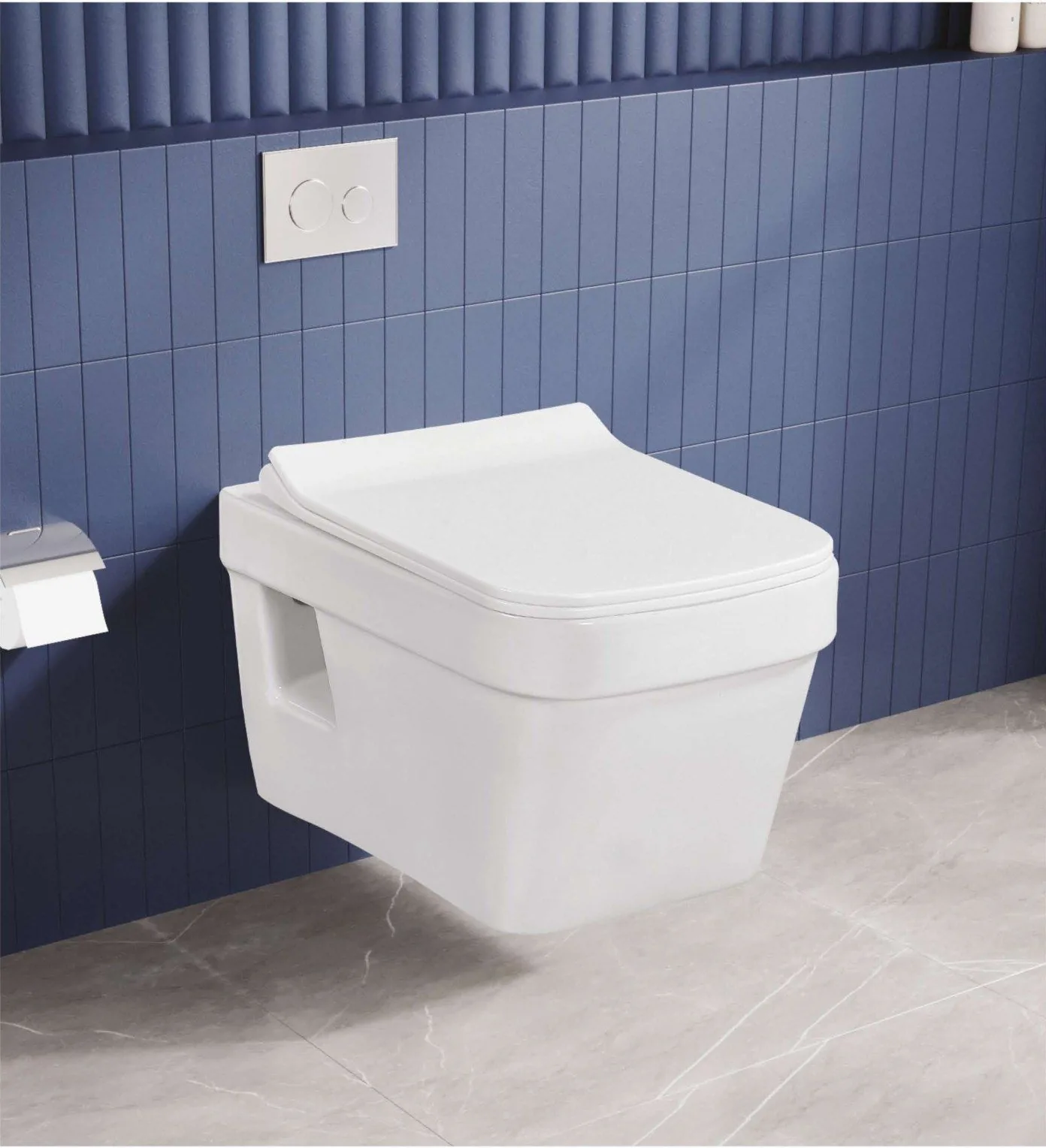
Rimless removes the channel entirely. Water is thrown around the open circumference with more force and better coverage, and every surface it touches can be wiped.
Syphonic models keep a high standing water level and use a syphon to pull the bowl empty rather than push it. That makes them noticeably quieter, and the high water level means far less of the bowl is ever dry enough to mark.
7D technology is our multi-directional variant — the flush is split into several streams that meet to scour the bowl in one pass, on 3 to 4.5 litres.
02 — Every piece is tested
Every seat and cover is loaded to check the hinge mounts and the moulding under real body weight.
Seats and covers are cycled to verify the soft-close damper actually damps — and keeps doing so.
Every WC pan is checked for odour leakage at the trap. A closet that smells is a closet returned.
Fully glazed body, anti-bacterial finish, checked for pinholes and crazing across the visible surface.
03 — Specification
The three questions that hold up ninety per cent of sanitaryware orders.
An S-trap discharges down through the floor. A P-trap discharges back through the wall. Look at your existing outlet before ordering — it is the single most common mistake. Our S-trap models are offered at 100 mm, 225 mm and 300 mm from the wall.
Rimless is easier to clean and flushes more evenly. Boxrim is the conventional closed-rim design — proven, quieter to make, and gentler on the budget. Both are in the range.
Wash-down pushes waste out with volume and velocity — simple and reliable. Syphonic pulls it out with a vacuum — quieter, with a larger water surface and less marking.